
3. Women vote for the first time in Saudi Arabia
Last December saw women in Saudi Arabia exercise the right to vote for the first time in history. Some 130,000 women registered to vote, while 978 registered as candidates in the latest municipal council elections. The ultra-conservative society is notorious for its discriminatory laws: women are not allowed to drive, and must gain male permission in order to travel, work or get married. Although the number of male voters greatly outweighed that of female voters, the election event marked a symbolic step forward in the struggle for gender equality and women’s rights in Saudi Arabia.
4. Amnesty International put the UAE in the spotlight until it released three disappeared sisters
On 15 February 2015, three sisters, Asma Khalifa Al-Suwaidi, Mariam Khalifa Al Suwaidi and Alyaziyah Khalifa Al-Suwaidi, were subjected to enforced disappearance by the UAE’s State Security apparatus. Security officials summoned the women for questioning and the sisters vanished for the next three months. Their crime was to run a peaceful Twitter campaign in support of their brother, a prisoner of conscience. After a global social media outcry, Asma, Mariam and Alyazia al-Suwaidi were released from secret detention on 15 May.

5. Wrongly imprisoned torture victim released
Claudia Medina, a torture victim from Mexico, was released and her charges were dropped. After her arrest, Claudia was tortured and sexually assaulted in order to force her to incriminate herself and others in drug-related crimes. The judicial investigation into the torture she has endured is still on the way.
6. Disabled Egyptian student freed from house arrest
Israa al-Taweel, a 23-year old disabled student, was arrested in June 2015 for socialising with two friends wanted by security forces. She was held without charge in pre-trial detention and questioned for hours without a lawyer present, whilst officials covered up her disappearance and did not inform her family or friends. She was then kept under house arrest and closely monitored. Widespread condemnation of her treatment was sparked by a picture of her crying in a courtroom. She won the support of Amnesty and former Egyptian presidential candidate Ayman Nour. Fortunately, Israa was freed from house arrest several months and the security measures against her were greatly reduced.
7. Prisoner of conscience finally reunited with his family
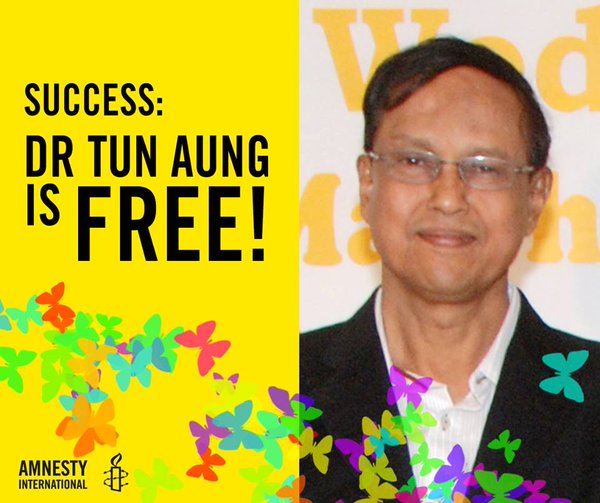
Burmese prisoner of conscience, Dr Tun Aung from Myanmar, was released. He was arrested and sentenced to 17 years in prison after an unfair trial in 2012 following riots – despite several witnesses acknowledging that he tried to calm the crowd. His case featured in the “Write for Rights” 2013 campaign, and Amnesty kept up the pressure for over two years to demand his release. Myanmar’s National Human Rights Commission acknowledged the role of the letters in encouraging them to further examine Dr. Tun Aung’s case.
8. Morocco repeals its ‘rape marriage law’
The Moroccan parliament have amended a law which allowed a man to marry his underage rape victim to avoid prosecution and a stain on family honour. Article 475 made headlines in 2012 following the tragedy of a 16-year-old girl who committed suicide several months after a forced marriage to her rapist (also the subject of a documentary). Whilst more change is needed, and faster, it was hailed as an important step by advocacy groups such as Amnesty and Avaaz. A bill threatening 25 years of prison for violators of this law is in draft stage.
9. An historic breakthrough on transgender rights in Norway
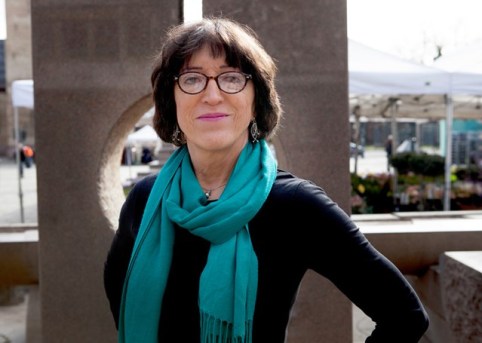
On 10 April 2015 an expert committee announced that transgender people in Norway should no longer be forced to trade invasive treatment for having their gender legally recognized,. This followed Amnesty’s global campaigning for John Jeanette Solstad Remø – a transgender woman and vocal activist featured in Amnesty’s Write for Rights 2014 campaign. In June, Norway’s government proposed that children as young as seven should be allowed to change their legal gender with parental support, among the lowest ages in the world for transgender rights.
10. Female genital mutilation is banned in Gambia
In November of 2015, the Gambian president announced an immediate ban on FGM. The barbaric custom is common to many African countries and involves the cutting of female genitalia, often when girls are at a young age. It can result in lifelong health issues including chronic pain, bleeding, infection and infertility. With 76% of its females having suffered FGM, Gambia has joined 19 other African countries in outlawing the tradition. This step shows that the state is prepared to strengthen its defence of the sexual and reproductive rights of women and girls in Gambia – let’s hope that further countries like Somalia, Liberia and Mali follow suit.
For further info, see the Amnesty Victories page
This article is part of a Journal series, ‘Refugee Crisis’
 The Amnesty
Leave a comment